


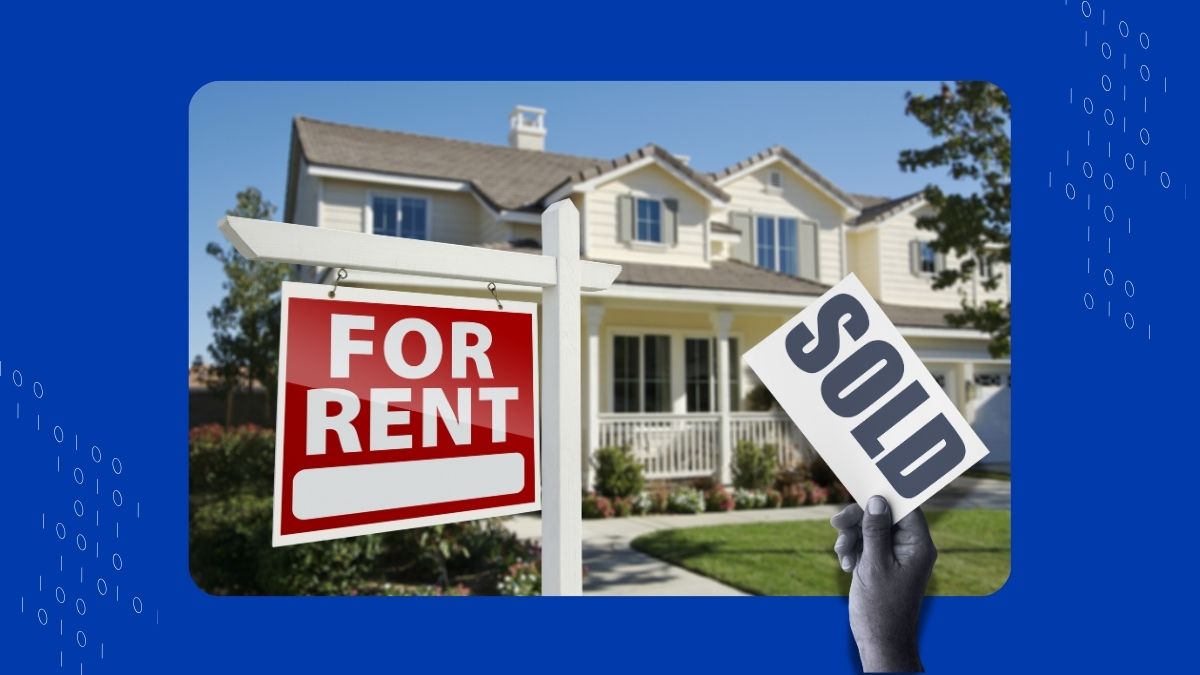
If you've put your life savings into an investment property, you might find it difficult to let go of it, particularly if it's still bringing you income each month. Like with any investment though, knowing the right time to sell is equally important as the right time to buy.
What to consider before selling your investment property
1. Market conditions
The real estate market is constantly fluctuating, with demand for rental properties rising and falling over time. Monitoring market conditions is important in determining the best time to sell, as the state of the market has a big impact on the sale price of a property.
Generally speaking, a booming real estate market with high demand and rising prices is the ideal time to sell a rental property. Similarly, examining the sales history in your street and suburb, as well as the general stock level of your suburb, can help determine if it's a good time to sell.
You’ll need to consider not only the selling market, but also the rental market.
2. Personal financial goals
Before selling a rental property, you'll want to consider your personal financial goals. If you are looking to retire or are facing unexpected financial challenges, selling the property could be a good way to generate a lump sum of cash.
On the other hand, if you are looking to expand your real estate portfolio, you may want to hold onto the property for a longer period of time, perhaps intending to use equity in your existing property as security to add to your portfolio.
3. Whether you are prioritising cash flow or capital gains
The two ways to make money from an investment property are through the cash flow generated by rental income and the capital gains you make when you sell (the difference between the price you receive when you sell the property and the original price you bought it for).
Some investment properties might generate a substantial positive cash flow each month (you are earning significantly more from rental income than the property is costing you in loan repayments and other expenses), but the value of the property is growing very slowly. On the other hand, your property may be negatively geared, meaning you make a loss each month, but the property value is appreciating quickly and you anticipate a large return when you sell the house.
The right time to sell in these scenarios will be very different. Let's say there is an increase in demand for home ownership, and a subsequent decrease in demand for renting. In the first example, a contraction in rental demand might mean you choose to sell since you will no longer be generating as much income. However, in the second situation, you might be unperturbed by a reduction in rental income, and instead hold your property as the increased demand will likely mean your property appreciates even quicker in value, netting you a larger capital gain when you eventually do sell.
Keep in mind that capital gains and positively geared rental income can be taxed at your marginal income tax rate; however, the capital gains tax rate is usually halved if you hold the property for longer than a year.
It could be worth reassessing your investment position if you’re also earning an income and the sale of a property could tip your capital gains tax obligation into a higher bracket.
4. Property-specific needs
The specific needs of the rental property can also impact the best time to sell. For example, if the property requires significant repairs or renovations, you might choose to wait until these improvements have been made before putting the property on the market.
Additionally, you'll want to consider the specific conditions of the surrounding area of your property. If there is significant nearby development in the pipeline that might increase the value of your property, it could be a good idea to hold off on selling until it is completed.
How to know when it could be time to sell
Every investment property is different, so you'll want to carefully consider your position before making any decision. Here are some examples of common circumstances that can prompt property owners to think more seriously about selling.
1. A looming recession
A recession, usually defined as two consecutive quarters where GDP growth falls, tends to reduce both property value and rental rates. As unemployment rises, many tenants struggle to afford rent, bringing down rates and even potentially embroiling you in legal proceedings should your tenants default. Property values also suffer as economic downturn leads to a reduction in disposable income, and thus the amount buyers have to spend on a new home.
While recessions can be difficult to predict, when there is uncertainty or trepidation about how an economy might perform over the coming years, selling your rental property early on could be a good way to protect yourself against potential losses.
2. Weakened rental demand
It's often helpful to think of your rental property purely as a business you own. If you anticipate demand contracting for the service you provide (temporary housing), you might want to sell your business before it becomes less profitable.
There are several reasons rental demand may weaken, aside from recession.
-
If interest rates are very low for an extended period of time, it's likely that the demand for home ownership will increase. While this may see the sale value of your home increase, it could also mean that rental demand decreases, which could be detrimental if you view your investment primarily as a source of monthly income.
-
A decrease in fresh migration, whether due to policy change or some other factor, will generally decrease the demand for rental properties.
-
A surge in the supply of new rental properties can reduce the demand for existing ones.
Should you observe any of the above, you might decide that the time is right to sell your investment property before you start receiving a reduced income.
3. Policy changes
Many potential policy changes could impact the profitability of a rental property. For example, if the state or territory your property is in introduces rental controls, restricting the amount of rent tenants can be charged, you are likely to see diminished income.
Other measures, such as stronger tenant protection laws, higher property taxes, or policies that encourage the construction of more affordable housing, could also reduce your returns by increasing competition in the rental market.
If your local government is signalling that such policies might soon be introduced, it may be wise to consider selling your property before those changes take effect.
4. Interest rates are going up
When interest rates go up, unless you have already paid off your mortgage, your profit margins on your investment property will normally decrease, as your monthly repayments become more expensive.
On top of this, increased interest rates often result in a decline in property prices after a few months. If you are sitting on a rental property that has seen a large increase in value when interest rates are hiked, you might choose to sell quickly to avoid your gains being eliminated.
However, keep in mind that in such cases, a lot of other investors are probably thinking the same, and the number of listings in your area might increase. As with a lot of investments, property is generally more about 'time in the market' rather than 'timing the market'.
5. Your interest-only period is coming to an end
Many investors choose interest-only (IO) investment home loans as interest is tax-deductible. This makes it possible to pay next to nothing in home loan repayments for three, five, or even 10 years. Some lenders even allow 10-year interest-only periods extendable for a further 10. A consequence of this is that your principal repayments kick in after this period, and are steeper because they're condensed into a shorter time frame.
If you are one of these borrowers, you might not necessarily have the cash flow to keep up with principal repayments (say if you're retired or the costs of the property outweigh the income). In this case, you might be looking at selling. On selling, you'd have hopefully made healthy capital gains to repay the lender the principal, plus pocket some profit for yourself.
6. Major life changes
Changes in your personal circumstances can make selling your property the most practical decision. For example, if you go through a separation or divorce, dividing assets often means selling jointly owned properties so both parties can move forward financially.
Retirement is another common turning point. After years of managing tenants, maintenance, and mortgages, many investors choose to simplify their finances and cash in on the capital growth they’ve built over time. Selling your investment property at this stage can provide additional funds for travel, lifestyle goals, or simply a more comfortable retirement.
Your investment property might also be in a lifestyle location such as close to the beach, and you might decide to change gears and live a more relaxed life in your new holiday home, rather than lease it full time.
In short, when your life circumstances shift, it’s worth reassessing whether holding onto your investment still aligns with your financial and personal goals.
How to sell your rental property
If you’ve decided to sell your rental property but are unsure where to start, taking a strategic approach can make all the difference. Here’s a step-by-step guide on what you need to know to make the process smooth and successful.
1. Review your financial position
Before selling, assess the financial implications. Work out whether selling makes sense in the current market and in light of your investment goals. Speak to your accountant or financial adviser about potential capital gains tax, which applies if the property has appreciated since purchase. It’s also important to consider loan discharge costs, agent commissions, and marketing fees, which can impact your final return.
2. Understand the market
Take a look at what’s been selling in your suburb recently and get a feel for how the market’s performing. Check things like vacancy rates, rental returns, and how much interest buyers are showing in similar properties.
You can use tools like InfoChoice’s free property report to get a snapshot of current market trends, before talking to a few local agents to find out what properties like yours are actually selling for and how buyers are feeling.
3. Decide how to sell
You can sell your rental property in two main ways:
-
With tenants in place: Ideal for investors, as rental income continues during the sale process. However, it can limit access for inspections and deter some owner-occupier buyers.
-
Vacant possession: Offers broader market appeal but may mean a short-term loss of rental income.
If your tenants are on a fixed-term lease, you’ll need to comply with state or territory tenancy laws, including giving the correct notice to vacate if you want to sell the property empty or conduct open home inspections.
4. Prepare the property for sale
Presentation matters. Even if tenants remain in place, aim to have the property clean, well-maintained, and presentable. Minor repairs, a tidy lawn, a fresh coat of paint, or professional styling can significantly boost buyer appeal and final sale price.
5. Choose the right agent
Select an agent experienced in selling investment properties in your area. They’ll understand how to market to both investors and owner-occupiers, manage tenant access for inspections, and negotiate the best deal on your behalf. Compare commissions, marketing packages, and local track records before signing an agency agreement.
6. Manage the sale process
Once listed, your agent will handle inspections, offers, and negotiations. Keep communication open with your tenants throughout the process, as their cooperation can make or break a smooth sale.
When an offer is accepted, your conveyancer or solicitor will prepare the contract of sale, handle disclosure requirements, and guide you through settlement.
7. Settle and reinvest
At settlement, the property officially changes hands. Your mortgage (if any) is paid out, and the proceeds are transferred to you. From there, you can decide whether to reinvest, pay down debt, or diversify your portfolio.
Selling usually triggers a tax event, so be prepared for this and talk to your financial adviser or accountant to help you navigate through this.


