


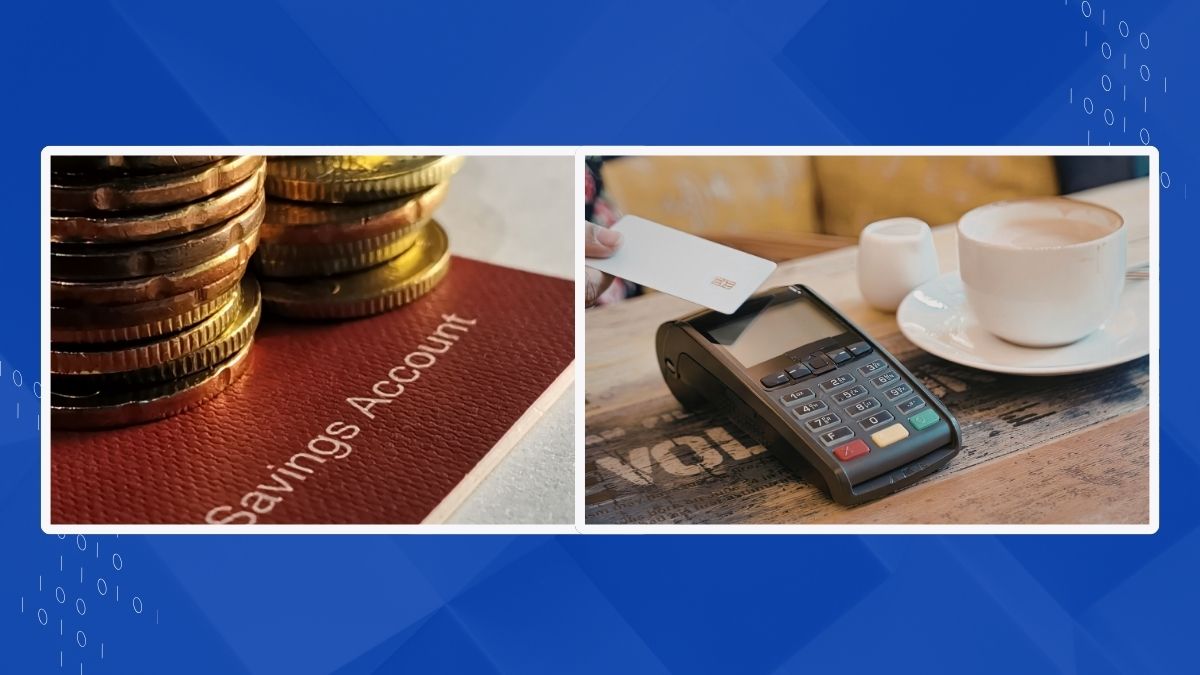
Many people confuse savings accounts and transaction accounts.
When you press the “savings” option at an ATM or on an EFTPOS terminal, you’re not actually accessing your savings account. Instead, you’re withdrawing money from your everyday transaction account - the one used for daily spending.
A true savings account, on the other hand, is designed specifically for setting money aside and earning interest. It’s separate from your transaction account and isn’t typically linked directly to ATM or EFTPOS withdrawals.
Transaction vs savings account
In a nutshell, these are the key difference of the two major types of bank accounts in Australia:
| Feature | Transaction Account | Savings Account |
|---|---|---|
| Purpose | Everyday banking and spending | Setting money aside to grow with interest |
| Access | Constant access via ATM, EFTPOS, internet banking, phone transfers | Limited access; usually linked to a transaction account for deposits/withdrawals |
| Salary & Bills | Salary is deposited here; bills paid via direct debit or BPAY | Not used for salary deposits or bill payments |
| Card & Payment Options | Debit card, EFTPOS, Apple Pay, BPAY, widespread ATM access | Typically no debit card or chequebook; discourages everyday spending |
| Fees | May have fees depending on facilities (ATM, EFTPOS, apps) | Often low or zero fees; some allow limited free withdrawals |
| Interest | Usually earns little to no interest | Designed to earn interest, often with bonus or promotional rates |
| Usage Frequency | Used daily for transactions | Accessed occasionally (e.g., monthly deposits or rare withdrawals) |
What is a transaction account?
A transaction account is the bank account that you'll use pretty much every day, whereas you may only interact with your savings account once or twice a month.
Your salary goes into your transaction account, and you pay your bills from it by direct debit. Your transaction account gives you constant access to your money. You'll be able to make transfers to other accounts, either online or over the phone; you can withdraw money from the account at an ATM, and you won't usually face a fee for these functions.
What to look for in a good transaction account
Of course, every person has slightly different requirements when they're looking for transaction accounts, but you should look for features that make life easier. When you're comparing transaction accounts, you should look for things like:
- An EFTPOS facility
- Internet banking
- Easy branch access
- Payment apps like Apple Pay
- Widespread (and preferably free) ATM access and usage
- BPAY
Some banks might charge fees on some of these facilities and features, so it's worth your while to use an account fee filter when you're comparing accounts.
What is a savings account?
A savings account is an account in which you deposit money and then, essentially, forget about it! The purpose of a savings account is to save money by leaving it in place so that compound interest can grow it.
Find out how much interest you could earn using our compound interest calculator. As you might have worked out, a savings account with high interest rates is better than one with a lower rate.
A savings account is a relatively safe place for your money to sit and grow. It's steady, and your money is protected by the government for up to $250,000 as long as you've used an authorised bank or credit union.
Savings accounts are not for everyday use
Savings accounts differ from transaction accounts because they're not to be used for regular transactions. You don't use them to pay bills or to receive your salary, for example.
Most savings accounts impose fees for any withdrawals that you may make, and some have minimum monthly deposit requirements so that you maintain good savings habits.
Generally, you won't have a debit card or chequebook either, because your bank wants to make it awkward for you to use the money for everyday expenses. Of course, if you need to withdraw the money earlier than you planned, you'll be able to, but you may have to wear a penalty, like lost interest for that month.
You will have to link your savings account to a transaction account in order to move money in and out.
Compare Australia’s leading savings accounts
Compare high interest rates, features, deposit conditions, interest earned and more using the table below!
Bank Savings Account Base Interest Rate Max Interest Rate Total Interest Earned Introductory Term Minimum Amount Maximum Amount Linked Account Required Minimum Monthly Deposit Minimum Opening Deposit Account Keeping Fee ATM Access Joint Application Tags Features Link Compare Promoted Product Disclosure
then 2.10% p.a.
Rate varies on savings amount.
Rate varies on savings amount.




What to look for in a good savings account
You shouldn't pick just any old savings account; you should compare the market offerings very carefully so that you choose the best one for you and your plans. You also don't need to choose a savings account at the same bank or credit union where you hold a transaction account.
Make sure that you look for and compare the following features.
A competitive interest rate
This is probably the most important feature of all, as it determines how rapidly your money will grow (which is, after all, the entire point!). When you're looking for a savings account, compare interest rates and focus on ones that are higher than the CPI rate. This rate is always changing, though, so keep up with it by consulting the Reserve Bank of Australia.
Introductory or bonus interest rates
Your savings account's best rate offering may be when you first open it. Some banks offer an introductory or promotional rate for a set period, so that your money attracts more interest for the first 12 months or so. It's important to find out what the rate reverts to after this period ends, though, as it may not be as good as others. You can sometimes "surf” to a new, higher-interest savings account so that you're always in a promotional period.
You may also receive a bonus rate for good behaviour. If you maintain your monthly minimum deposits and don't make any withdrawals for a stipulated period, your interest rate might get a slight bump.
It's also worth asking your transaction account provider if you'll get a higher interest rate by opening one of their savings products. You may also get a better rate if you link your transaction and savings accounts together so that you "sweep” money across regularly.
Low or zero account fees
Don't put up with fees on a savings account! Banks often have a schedule of fees when it comes to transaction accounts, but your savings account should generally be fee-free.
There are plenty of savings accounts out there that don't have any fees or that allow you to make, for example, two withdrawals a year for free, so do look out for this.
You can research and compare transaction banking accounts in Australia here.
First published in March 2023

